
Oklahoma City · Est. 2011

The law broke them.
Now they will rewrite it.

The Advocacy Council builds impact litigation, retroactive sentencing reform, and career pathways alongside the Oklahomans who have lived under the criminal legal system — because the people most impacted by the law should lead its transformation.

The Work in Numbers
20+
Years of criminal-justice-reform advocacy in Oklahoma
2,000
Oklahomans potentially eligible for retroactive sentence relief under SQ 780 / HB 1269
65,000
Old felonies eligible for reclassification as misdemeanors after voter reform
#1
Oklahoma ranks among the highest incarceration rates in the United States
Our Mission

Legal research, litigation strategy, and legislative change built alongside the people the system has silenced.

The Advocacy Council exists so that Oklahomans who have been wrongfully convicted, over-incarcerated, or left behind by sentencing reform are the ones leading its transformation.

Founded in 2004 and formalized as a legal-advocacy program in 2011, the Council provides litigation research and strategy for attorneys representing marginalized populations across Oklahoma — from post-conviction relief and factual-innocence claims to constitutional challenges and sentence-modification petitions. See the founder's public record.

We work in three interlocking arms: impact litigation and post-conviction defense, retroactive sentencing reform under SQ 780 and HB 1269, and career pathways that clear the way for incarcerated and returning Oklahomans to become lawyers, engineers, and clinicians.

Three Arms of the Council

Every initiative attacks the pipeline from a different angle — and reinforces the others.

Oklahoma's incarceration crisis was not built by one policy, and it will not be undone by one either. Our work is deliberately layered — courtroom, capitol, and career all at once.

Arm 01 Warm afternoon light in a historic Oklahoma courtroom
Impact Litigation

Post-conviction defense, factual-innocence claims, and constitutional challenges.

The Council researches and constructs post-conviction relief applications under Oklahoma's Post-Conviction Procedure Act (22 O.S. §1080), factual-innocence petitions, and appellate briefs for Oklahomans whose convictions or sentences were secured in violation of state or federal law.

We prepare the underlying record, brief the legal theory, and hand attorneys a litigation-ready package — because in a state where indigent post-conviction counsel is unavailable outside capital cases, strategy quality is the difference between relief and a procedural bar.

PCR Petitions Factual Innocence Federal Habeas Appellate Briefs
Refer a case
Arm 02 Oklahoma State Capitol dome
Retroactive Sentencing Reform

Making Oklahoma voters' reforms actually reach the people still in prison for them.

In 2016 Oklahomans overwhelmingly passed SQ 780, reclassifying simple drug possession and low-value property crimes as misdemeanors. In 2019 the Legislature made that reform retroactive through HB 1269 — but the burden of petitioning courts still falls on the incarcerated.

The Advocacy Council builds the petitions, drafts the modification pleadings, and pushes the follow-on legislation Oklahoma still needs: automatic expungement, clemency-review expansion, and full retroactivity for reforms passed after 780.

SQ 780 Retroactivity Sentence Modification Legislative Drafting Expungement
Petition & policy help
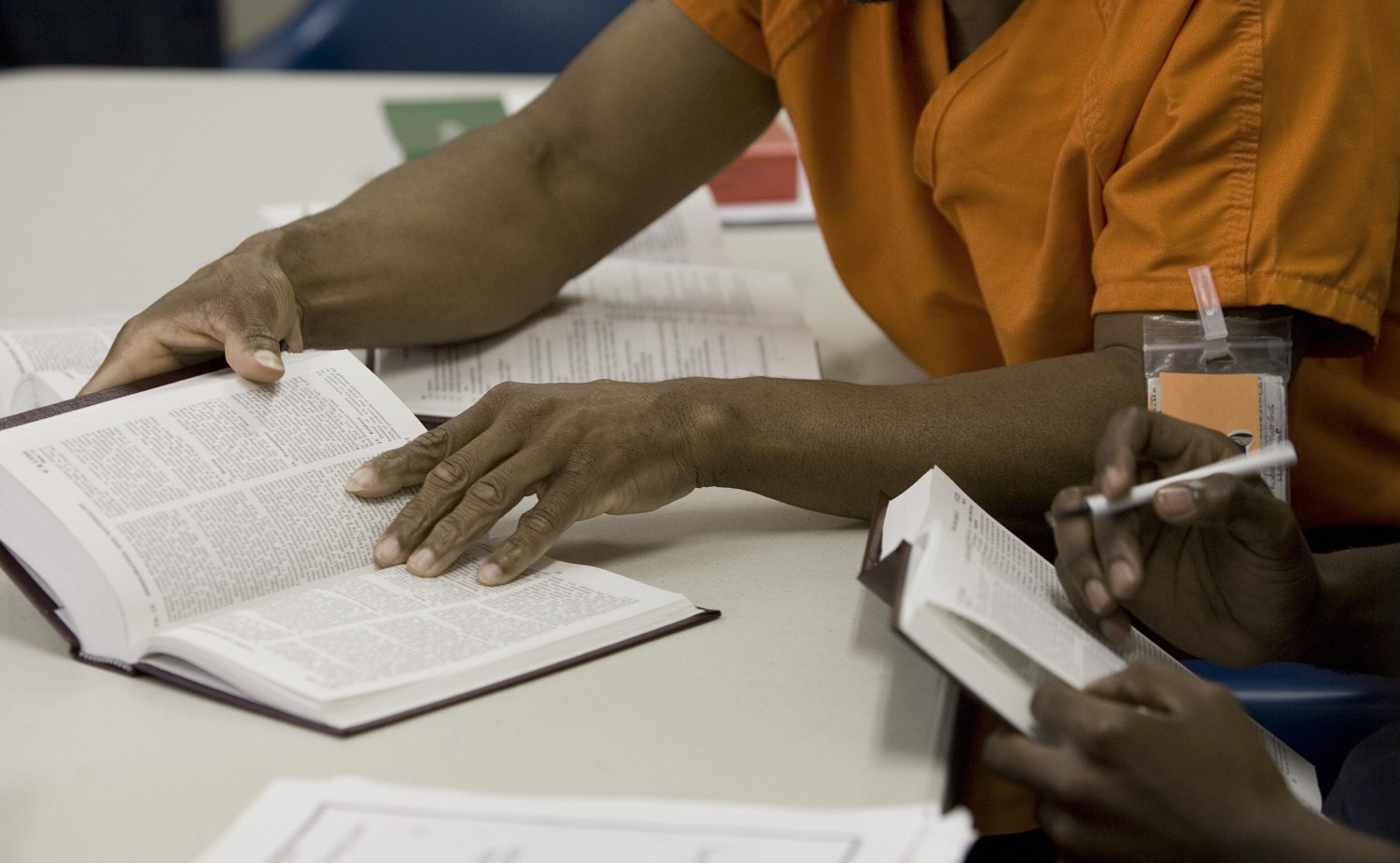
Arm 03 · Signature Initiative Incarcerated students studying in a prison law library
Prison-to-Law Pipeline

Train Oklahoma's incarcerated jailhouse lawyers into licensed ones.

Incarcerated Oklahomans already run some of the most sophisticated pro-bono legal help in the state — every prison has its "jailhouse lawyer" turning out habeas briefs on a typewriter. The Advocacy Council is asking the Oklahoma Bar Association to formalize that reality: teach law inside, prep incarcerated students for the LSAT, and remove the character-and-fitness barriers that keep formerly incarcerated people out of law school.

Our ask of the OBA is concrete: sponsor a paralegal certificate track inside DOC facilities, administer the LSAT on-site, adopt written character-and-fitness standards that account for rehabilitation, and open externship slots for JD scholars still finishing their sentences.

OBA Partnership LSAT Prep Inside Paralegal Certification Character & Fitness Reform
The OBA partnership brief
Launching 2026 Adult students learning cloud engineering on laptops
Career Pathways · Immediate Initiative

Certification partnerships with tech and healthcare — because a JD isn't the only exit from the system.

Not everyone leaving Oklahoma's prisons wants to practice law — and not every path back to full citizenship should run through it. The Advocacy Council is standing up direct partnerships with major technology and healthcare training providers to bring industry-recognized certifications inside, delivered online while a person is still incarcerated and completed on release.

Target credentials include Google Cloud Engineer, AWS Solutions Architect, and AI/ML architecture tracks on the technical side, plus Certified Medical Assistant, Certified Pharmacy Technician, Community Health Worker, and Surgical Tech on the healthcare side — all pathways with living wages, growing demand, and open hiring pipelines for justice-impacted candidates.

Google Cloud AWS & Azure AI Architecture Medical Assistant Pharmacy Tech Community Health
Partner with the launch cohort
Founder & Executive Director
I was incarcerated. Even in prison, I lived in the law library — I knew I would be a lawyer. The people most impacted by the law are already the ones running the most effective legal aid inside Oklahoma prisons. My job is to hand them the credentials the system uses to lock them out.
Gwendolyn Black, JD Executive Director · Racial Justice Advocate · Legislative Change Agent

Gwendolyn Black was incarcerated. Even in prison, she lived in the law library — she knew she would be a lawyer. Upon her release in 2004 she started college, pursued petroleum engineering, and graduated from the University of Oklahoma.

Through what she calls a series of divine encounters, Dr. Susan Sharp connected her with Senator Connie Johnson, and together they brought experts to symposia and propelled the public dialogue on women and incarceration in Oklahoma — a state that was ranked number one in the incarceration of women, mostly mothers, destroying not only their children but guaranteeing generational incarceration. Connie and Gwendolyn wrote many bills that were ahead of their time. Not all of them passed, but they laid the groundwork for the legalization of medical marijuana, the decriminalization of marijuana possession, the repeal of Life Without Parole for drug offenses, and sustained work on Oklahoma's unusual number of wrongfully convicted and disproportionately sentenced people.

She didn't get to law school until she was over fifty years old, and earned her Juris Doctor in 2022. The work is not finished. Today, under her leadership, The Advocacy Council is moving the frame from “criminal justice reform” to returning citizens' successful integration — prepared to thrive, not merely exist and stay out of trouble. See her public profile.

Help us finish the work

Our Values

Five commitments that shape every case, every bill, every partnership.

Impacted people lead.

Every strategy is co-authored with people who have lived under the criminal legal system. Lived expertise sits at the same table as legal expertise.

Reform is retroactive or it's incomplete.

Voter-passed reforms that leave people already in prison behind are half-measures. The Council pushes every reform back through the prison walls.

Time inside is not wasted time.

Every year of incarceration should be an accredited year of training — paralegal, engineer, clinician — not warehoused idleness.

Institutions have to change with us.

The Bar Association, the DOC, the Pardon and Parole Board — reform isn't a favor they grant. We meet them as partners with a specific ask.

Excellence is the argument.

The best answer to "these people don't belong here" is a brief so tight it wins. We produce work that changes minds on its merits.

More paths out, not fewer.

The point is not to force every returning Oklahoman toward one credential. It's to open every credential — legal, technical, medical — to them.

The Ask

A formal partnership with the Oklahoma Bar Association.

Oklahoma leads the nation in per-capita incarceration and still bars incarcerated and formerly incarcerated Oklahomans from most law-school pathways. The Advocacy Council is asking the OBA to formalize four specific commitments:

  1. 1. Accredit a paralegal-certificate track inside DOC facilities, taught by OBA-vetted volunteers and Council staff.
  2. 2. Administer the LSAT on-site at DOC facilities, with test-prep delivered inside for at least 12 months prior.
  3. 3. Publish written character-and-fitness standards that account for rehabilitation, time since offense, and lived expertise.
  4. 4. Open sponsored externships for JD scholars still completing sentences, with private-firm and legal-aid host partners.
Support the Work

This work is urgently underfunded.

The Advocacy Council is a 501(c)(3) nonprofit. Every petition drafted, every LSAT prep book shipped inside, every certification cohort we stand up depends on people and businesses who decide that Oklahoma's incarceration crisis is theirs to help solve.

Oklahoma leads the nation in incarcerating women, and near-leads it for men. The people we serve — the wrongfully convicted, the disproportionately sentenced, the returning citizens ready to rebuild — cannot fund this fight themselves. The bar is high because the stakes are: a well-drafted post-conviction application is often the difference between another decade in prison and a family reunited. A certification delivered inside is the difference between recidivism and a career. We need members from every business sector to make this real.

Where Your Support Goes

Concrete line items, not overhead.

$250

Funds one post-conviction petition — research, drafting, filing, and copies for an Oklahoman still inside.

$1,000

Sends a full LSAT prep library and one year of testing fees to a DOC facility for the Prison-to-Law pipeline.

$5,000

Underwrites one certification seat — Google Cloud, AWS, Medical Assistant, or Pharmacy Tech — from enrollment through licensure.

$25,000

Sponsors an impact-litigation docket — a full year of PCR strategy for a cluster of related cases.

$100,000

Launches a pilot cohort — 20 incarcerated Oklahomans through paralegal certification, or a full career-pathway class of 40.

$500K+

A Founding Sector Partner: named partnership, multi-year initiative sponsorship, and a permanent seat on the strategy table.

Membership by Sector

We need every business sector represented.

Mass incarceration is a total-system problem. Undoing it requires a total-system coalition. If your industry hires, trains, credentials, insures, houses, banks, treats, or advises Oklahomans, we need you on this council.

Law & Legal Services

Firms, solo practitioners, in-house counsel, legal-tech vendors.

Technology & Cloud

Google, AWS, Azure partners; AI/ML shops; cybersecurity, dev-tools.

Healthcare & Life Sciences

Hospitals, clinics, pharma, medical-device makers, allied-health schools.

Energy & Infrastructure

Oklahoma's oil, gas, wind, and utilities — major regional employers.

Finance, Banking & Insurance

Community banks, credit unions, second-chance lenders, insurers.

Construction & Trades

Union apprenticeships, contractors, trade schools, journeyman programs.

Higher Education

Law schools, community colleges, university partners, scholarship funders.

Real Estate & Housing

Landlords open to fair-chance leasing, developers, transitional housing.

Retail, Hospitality & Logistics

Fair-chance employers hiring returning citizens at scale.

Faith Communities

Congregations funding cohorts, mentorship, and reentry infrastructure.

Media & Communications

Journalists, PR, creative studios telling the story straight.

Philanthropy & Family Offices

Foundations, DAFs, individuals aligned on criminal-legal reform.

Tax-Deductible

The Advocacy Council is a 501(c)(3) nonprofit. Your gift is tax-deductible to the fullest extent allowed by law.

Individual donors, family foundations, corporate sponsors, and DAF grants are all welcome. We provide sector-partner packets on request, and we're happy to structure multi-year commitments, restricted gifts to a specific initiative, or in-kind partnerships (curriculum, licenses, seats, hardware, mentorship time).

Donate now Become a sector partner Request 501(c)(3) letter
For Lawyers

Join our preferred post-conviction & civil-rights referral network.

Every week the Advocacy Council receives requests from Oklahomans and their families looking for competent, committed counsel in post-conviction and civil-rights matters. Qualified attorneys who demonstrate excellent, zealous representation in these areas are listed on our public Preferred Specialists page as a referral resource for prospective clients.

This is not a paid directory. Listing is earned through demonstrated craft, ethics, and follow-through on cases we refer or observe. Complete the intake below to be considered.

What Earns a Listing

Four standards we evaluate against.

01

Substantive expertise

Demonstrated proficiency in Oklahoma PCR (22 O.S. §1080), federal habeas, §1983 civil-rights actions, or wrongful-conviction litigation.

02

Zealous advocacy

Track record of pushing procedural bars, developing new records, and refusing to write cases off as unwinnable when the law and facts allow relief.

03

Client-centered practice

Responsive communication with incarcerated clients and their families, transparent fee structures, and honest case assessments.

04

Good standing & ethics

Active bar status in Oklahoma or federal courts serving Oklahoma, no undisclosed discipline, and adherence to the Oklahoma Rules of Professional Conduct.

Apply for Consideration

Preferred Specialists intake

Submissions are reviewed by the Executive Director. We may follow up for writing samples, references, or a brief conversation. Listing is at the sole discretion of The Advocacy Council and does not create an attorney-client, employment, or agency relationship.

Or email a c.v. and cover letter to preferred@advocacycouncil.org. Listing decisions are final and revisitable annually.

Context & Sources

The evidence base for our work.

Request our research packet
Retroactivity · StateImpact

HB 1269 would let 2,000 Oklahomans petition for release under SQ 780.

Coverage of the 2019 bill making State Question 780's felony-to-misdemeanor reclassification retroactive, and the estimated 65,000 old felonies eligible for downgrade.

StateImpact Oklahoma · 2019
Reform Report · TU College of Law

A Roadmap for Reform — University of Tulsa Community Action Committee.

Multi-part reform framework for Oklahoma's criminal legal system produced by the University of Tulsa; grounds much of our current sentence-modification research.

University of Tulsa · Final Report
Vera Institute

Greater Oklahoma City Chamber Criminal Justice Report.

Vera Institute analysis for the OKC Chamber quantifying Oklahoma's incarceration crisis, its economic drag, and its concentrated impact on Black and Hispanic communities.

Vera Institute of Justice
Policy · ACLU of Oklahoma

Criminal Justice Reform in Oklahoma.

The ACLU of Oklahoma's ongoing docket of sentencing, indigent-defense, and drug-policy reforms — an aligned advocacy track we frequently support with research.

ACLU of Oklahoma
Statute · 22 O.S. §1080

Oklahoma Post-Conviction Procedure Act.

The governing statute for post-conviction claims in Oklahoma — the framework under which most of our impact litigation is filed, including its 2022 one-year limitation amendment.

Oklahoma Statutes · Amended 2022
NACDL Legislative Tracker

Oklahoma Criminal Justice Legislative Tracking.

The National Association of Criminal Defense Lawyers' running record of Oklahoma criminal-justice bills — a live view of what we're pushing for, defending against, and drafting alongside.

NACDL · Ongoing
Get Involved

Refer a case. Partner a program. Fund a cohort. Reach us.

The Advocacy Council works with attorneys, incarcerated Oklahomans and their families, legislators, bar associations, foundations, and corporate training partners. If your work crosses any of ours, start here.

  • Location
    Oklahoma City, OK
  • General
    hello@advocacycouncil.org
  • Litigation
    litigation@advocacycouncil.org
  • Partners
    partnerships@advocacycouncil.org
  • Director
    Gwendolyn Black, JD — LinkedIn